
HUGS logo

Funeral Service Memorabilia

"One of the greatest gifts God gives us is the ability to remember" says Robert Herr. This is one of the reasons why the Herr Funeral Home has dedicated a large area of their facilities to the preservation of funeral tradition.

1918 Sayers & Scoville Hearse

The 1918 Sayers & Scoville hearse was purchased in the mid 1970's with 12,000 original miles. It can reach a maximum speed of 15 mph, too fast for the people of its day. The rear of the hearse is made entirely out of wood as are the tire rims. In order to prevent cracking of the wood the hearse is now displayed in a glass, climate-controlled room attached to the funeral home.

Antique Burial Shroud (left) & Child's Fisk Casket (right)

This linen shroud, referred to as a "Totenhemd" in German, was woven about 1890, and so is approximately 100 years old. These shrouds were usually prepared during adolescence, and a couple was not properly prepared for marriage unless both husband and wife possessed one. This shroud was never used, since the practice was discontinued following World War II. This shroud was procured in East Germany through the courtesy of Rev. Dennis A. Kastens.

The Fisk Child's Casket was an air-tight casket made from cast iron, patented in 1848 by Dr. Almond D. Fisk. The sarcophagus style casket has ornaments of drapery, flowers, and angels (all emblems of mortality) adorning its bronze finish, and a glass plate, in order to allow the viewing of the deceased. Dr. Fisk originally sold his caskets in 1862 from $7.00 to $40.00, in his showroom in New York. This unused casket was purchased by the funeral home in 1994, outbidding the Smithsonian Institute.

Mourning Jewelry

Before the invention of cameras and camcorders the only way to keep visual memories of the deceased was either through mental images, paintings, or jewelry of sentiment. Jewelry such as brooches, earrings, necklaces, bracelets, watch fobs, and hair wreaths were woven using the hair of the deceased. Mourning jewelry sometimes also included teeth which were woven with the hair to produce the individual pieces. In the old Sears and Roebuck catalog they had a section of jewelry they would make for you if you sent in strands of hair, although most were made by family members and therefore more unique.

Lebensweckers(pronounced Leeben vaak er)

Lebensweckers were used back before stethoscopes and electrocardiograms to determine if someone was really dead. The cap was taken off revealing the numerous sharp pins, then using a thumping motion was used to strike "sensitive" body parts. If a person didn't react then they were considered to be deceased.

Mourning Ribbons

Mourning ribbons were worn to show that a person was in mourning over the death of an important person. Most notably they were used for assassinated presidents and union officers. The mourning ribbons shown here are for Presidents Lincoln, Garfield, McKinley, and Kennedy.

Antique Embalming Fluids in Their Original Containers

These antique embalming fluid bottles, most still unopened and hand blown, are a remembrance to the early days of embalming.


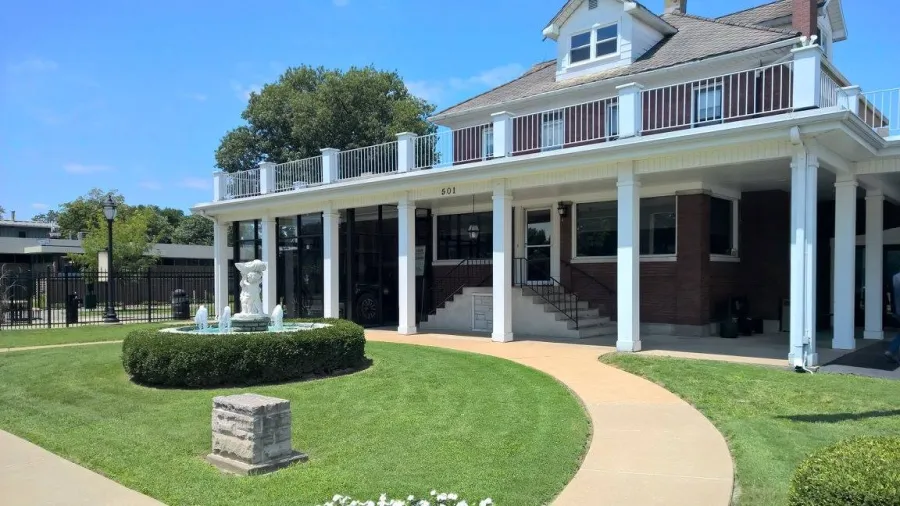
Collinsville IL: 501 W. Main St., Collinsville, IL - (618) 344-0187
Caseyville, IL: 300 W. Lincoln, Caseyville, IL - (618) 344-1151
Glen Carbon IL (Sunset Hill): 50 Fountain Drive at Rt. 157 - (618) 656-3220

OBITUARIES | FUNERAL HOME | SUNSET HILLS CEMETERY
OUR HERITAGE | LINKS | CONTACT US